
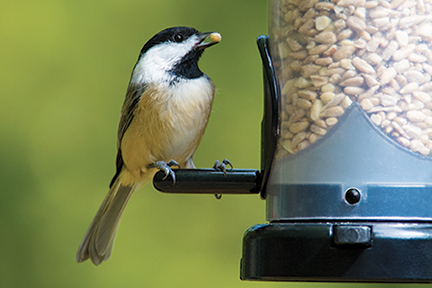
Dreaming of a Way to Enhance Your Bird Feeding Setup?
Save 15%*
On Our Advanced Pole System (APS) Hardware!
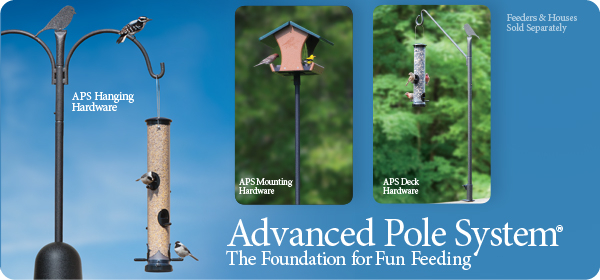
All Great Bird Feeding Stations Start Here
Comprised of interchangeable hardware pieces, our patented Advanced Pole System® (APS) is the foundation for successfully attracting birds to your yard. APS lets you create a customized setup that best suits your yard and the birds you want to attract.
All APS parts are powder-coated to prevent rusting, and they fit together easily with no special tools required. There are a variety of accessories, including baffles, our Decorative Branch Perch, crook arms and more. You can use APS for hanging or mounting feeders and houses or on or deck – we offer several options.
*Valid only at WBU Vancouver and North Vancouver. Offer valid in-store and on-line. One discount per purchase. Offer not valid on previous purchases or when combined with other offers. Not valid on sale items. Offer valid 10/19 thru 11/1/26.
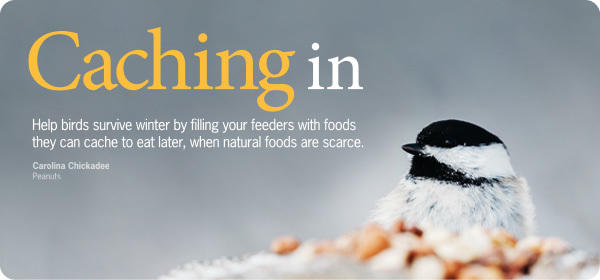
Caching: Remember or Die!
Would you stake your life on your memory?
For many of us, probably not! But if forced to, how would you deal with a situation where the ability to remember where you put some food would be the difference between life and death? Well, if you could mimic a chickadee, you would simply grow more memory cells to make sure you don’t forget!
Amazing -and true!- here’s how it works. Each fall, chickadees begin caching seeds by the thousands. By storing seeds, they ensure they will have something to eat during harsh weather and when natural foods become scarce in the future.
In a behavior called scatter hoarding (which is one of the types of caching), each seed they collect is individually hidden in a unique location. Common storage sites include under tree bark, dead leaves, clusters of conifer needles, in knotholes and even under house siding and shingles. Chickadees have the extraordinary ability to accurately remember the location of each and every one of the seeds they hide for months to come!
It all has to do with their hippocampus, the region of the brain that stores locational memories. In chickadees, it is proportionately larger when compared to birds that do not cache food. Not only is it larger, it even increases in size each autumn and shrinks back down to its original size by spring. More space, more memories! Then wipe them clean when they are no longer needed. Pretty darn cool!
Other birds share this same caching behavior, including nuthatches, titmice and jays to name a few. Favorite targets for them to cache from your feeders can include sunflower and safflower seeds, tree nuts and peanuts. By providing a foundational feeder filled with their favorite foods, you can help your birds with their caching needs. Recent research has shown that a consistent and reliable source of food helps birds to build body fat reserves, reduces their physiological stress and helps to maintain a healthy body condition.
Here's some ideas of food to offer different birds based on their caching preferences!
Chickadees prefer to cache black oil sunflower seeds; often eating a small portion before hiding it in and under bark, dead leaves, knotholes, clusters of pine needles, gutters, shingles and in the ground. Chickadees caches more in the middle of the day when visiting feeders.
Titmice are rather particular. They choose the largest sunflower seeds available to eat and cache. Titmice and chickadees like to cache seeds within 130 feet of bird feeders; your yard or a neighbor's yard. Often, they tuck seeds into the bark and crevices of a wood pile or on a large branch. They even cache them under mulch in a garden.
Nuthatches prefer heavier sunflower seeds over the lighter ones. Be sure to have some sunflower chips in your blend, too, as they like these 25% more than ones in the shell. They prefer to hide foods on deeply furrowed tree trunks and the underside of branches. Nuthatches are also known to hide seeds under a shingle or behind wooden siding.
Jays love to cache peanuts, sunflower seeds, acorns and pine nuts. They are especially fond of peanuts in the shell. They bury them in the ground and are known to cache about 100 in a day; emptying a feeder in no time. Watch for them make repeated trips to your feeders (or an oak or pine tree) and fly off. They can travel up to two miles to bury their nutritious treasure.
They will remember… and survive because of it!
Special Event

October Nature Happenings Chickadees are caching. Offer black oil sunflower to give them a helping hand.
learn more